
Specialized surgical repair of the nose following skin cancer removal or trauma. Dr. Hassan Nasser frequently sees referrals from the University of Michigan Health System and patients throughout Ann Arbor and Washtenaw County, utilizing advanced, multi-layered reconstructive techniques to restore normal breathing function and natural facial aesthetics.
Understanding Nasal Reconstruction
The nose is the most prominent feature of the face and serves a critical function in breathing. When a portion of the nose is removed due to skin cancer (like after Mohs surgery) or lost to trauma, the resulting defect requires highly specialized reconstruction.
Nasal reconstruction is widely considered one of the most complex areas of facial plastic surgery. The nose is composed of three distinct layers: an inner mucosal lining, a structural framework of cartilage and bone, and an outer layer of skin. Dr. Hassan Nasser carefully evaluates which of these layers are missing and systematically rebuilds them to restore both the appearance and the airway.
What This Procedure Treats
Nasal reconstruction addresses defects on all anatomical subunits of the nose, including:
Nasal Subunits & Three-Layer Structure
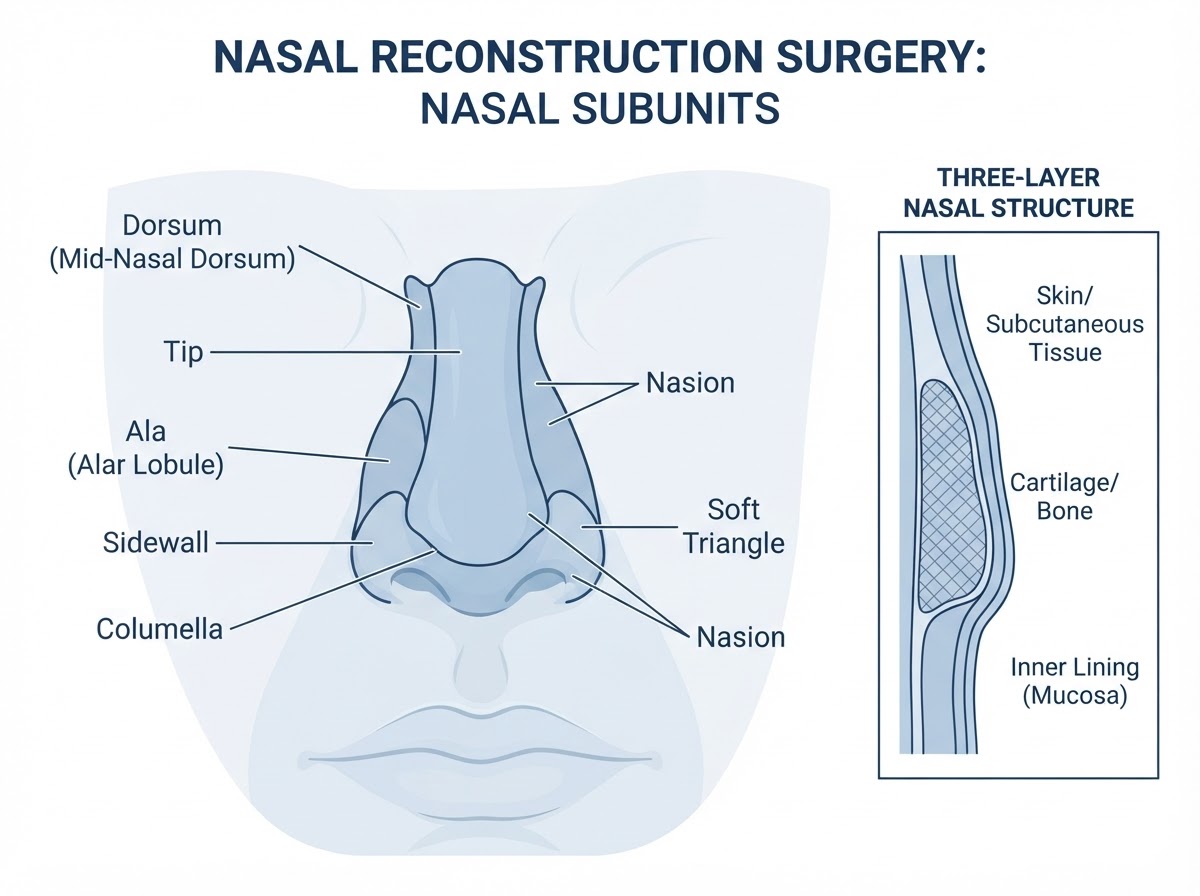
Anatomical subunits of the nose and its three-layer structure that must be rebuilt during reconstruction. Tap each number to learn more.
- The Nasal Tip & Ala (Nostril)These areas have thick, sebaceous skin and delicate cartilage that keeps the nostril open during breathing. Defects here often require cartilage grafts to prevent airway collapse.
- The Nasal Dorsum (Bridge) & SidewallsThese areas have thinner skin. Reconstruction must ensure a smooth contour that blends naturally with the cheeks and forehead.
- Full-Thickness DefectsWhen the cancer involves all layers (skin, cartilage, and inner lining), a multi-stage reconstruction is necessary to rebuild the entire structure from the inside out.
Who is a Good Candidate?
You may be a candidate for specialized nasal reconstruction if you:
- Have an upcoming Mohs surgery for skin cancer located on the nose.
- Have an existing defect from previous skin cancer removal or trauma.
- Are experiencing nasal airway obstruction due to a previous defect or surgery.
- Are committed to the healing process, which may involve multiple surgical stages for complex defects.
Your Consultation
During your consultation, Dr. Nasser will:
- Evaluate the Defect: Assess the size, depth, and specific anatomical subunits involved.
- Assess Airway Function: Determine if the structural support of the nose has been compromised.
- Discuss Reconstructive Options: Explain whether a single-stage (local flap/graft) or multi-stage procedure is required based on the missing tissue layers.
- Coordinate Care: Work directly with your Mohs surgeon to schedule the reconstruction seamlessly following cancer removal.
Procedure Overview
Depending on the complexity of the defect, Dr. Nasser utilizes a tailored approach:
Single-Stage Reconstruction
For smaller, superficial defects, Dr. Nasser may use a local flap (moving adjacent skin from the nose or cheek) or a skin graft (taking skin from behind the ear or collarbone). The goal is to provide coverage with tissue that closely matches the surrounding nasal skin in color and texture.
Multi-Stage Reconstruction (Paramedian Forehead Flap)
For large or deep defects, particularly those involving the nasal tip or requiring cartilage grafts, a multi-stage approach is often recommended.
Stage 1: Cartilage Grafting (from the ear or Septum) is placed to rebuild the nasal framework. A Local Flap of skin from the forehead (which has an excellent blood supply and matches nasal skin perfectly) is pivoted down to cover the defect. The flap remains attached to the forehead by a "pedicle" or bridge of tissue to keep it alive.
Stage 2 (and sometimes 3): After 3 to 4 weeks, once the flap has established a new blood supply from the nose, the pedicle is divided, and the final contours of the nose and forehead are refined.
Recovery Timeline
Recovery depends on whether a single or multi-stage procedure was performed:
- 1First Few DaysSwelling and bruising around the nose and eyes are common. You will have specific wound care instructions. If a forehead flap is used, the pedicle will be visible and require careful cleaning.
- 21-2 WeeksSutures are typically removed. For single-stage procedures, patients can often return to normal social activities. For multi-stage procedures, you will await the second stage surgery.
- 33-4 Weeks (Multi-Stage)The second stage surgery is performed to divide the pedicle and refine the reconstruction. Recovery from this stage is generally quicker.
- 4Long-Term (6-12 Months)Swelling in the nose takes a long time to fully resolve. The scars will continue to soften and fade over the course of a year.
Benefits
- ✓ Restoration of natural nasal appearance and symmetry.
- ✓ Preservation or improvement of nasal breathing (airway).
- ✓ Use of advanced techniques (like forehead flaps) for optimal color and texture match.
- ✓ Rebuilding of structural support to prevent long-term collapse.
Potential Risks
- • Visible scarring (though techniques minimize this).
- • Temporary or permanent changes in nasal breathing.
- • Need for minor revision surgeries to optimize contour.
- • Infection or poor wound healing (rare).
Why Patients Choose Dr. Hassan Nasser
Nasal reconstruction demands an intimate knowledge of both the aesthetic proportions of the face and the functional anatomy of the airway. Patients trust Dr. Nasser because of his:
- Dual Expertise: Board-certified in Otolaryngology (ENT) and fellowship-trained in Facial Plastic Surgery, providing a comprehensive understanding of both nasal function and aesthetics.
- Advanced Techniques: Extensive experience with complex, multi-stage reconstructive procedures, including paramedian forehead flaps and structural cartilage grafting.
- Collaborative Care: Seamless coordination with Metro Detroit's leading dermatologists and Mohs surgeons.
- Patient-Centered Approach: Providing clear, realistic expectations and compassionate support throughout the entire reconstructive journey.
Educational Disclaimer
This content is provided by the practice of Dr. Hassan Nasser for general educational purposes only. It is not a substitute for professional medical advice, diagnosis, or treatment. Always seek the advice of your physician or other qualified health provider with any questions you may have regarding a medical condition. Individual results and recovery vary.
References & Sources
Preparing For Your Visit
To ensure a smooth coordination with your Mohs surgeon, please prepare the following:
- Surgical Dates: Provide the exact date and location of your scheduled Mohs surgery.
- Dermatologist Info: The name and contact information of your diagnosing dermatologist.
- Medication List: A complete list of current medications, especially any blood thinners.

A New Chapter After Nasal Reconstruction
Nasal reconstruction can restore both breathing function and facial appearance. Dr. Hassan Nasser's expertise in nasal reconstructive surgery helps patients regain confidence and comfort, whether the reconstruction follows cancer removal, trauma, or congenital differences.
Each surgical plan is individualized to achieve a natural nasal contour that complements the patient's facial features.
Frequently Asked Questions
Educational information regarding nasal reconstruction.
Expertise in Nasal Reconstruction
If you are facing nasal reconstruction following skin cancer removal or trauma, specialized care is essential to restore both form and function. Schedule a consultation with Dr. Hassan Nasser.