
Facial Harmony & Proportions
Chin & Jawline Enhancement
Chin and jawline enhancement procedures are designed to improve facial balance, strengthen a weak profile, and provide structural support to the lower face and neck.
The chin is a foundational element of facial harmony. Its size and projection significantly influence how other features—particularly the nose and neck—are perceived. Serving patients from Novi, Troy, and across Metro Detroit, Dr. Hassan Nasser provides highly individualized treatment. On this page, you will learn how the chin affects overall facial proportions, the available treatment options, and what to expect during recovery.
Understanding Facial Balance
Aesthetically pleasing faces often share a sense of balance and proportion among their features. The relationship between the nose, chin, jawline, and neck is particularly important in creating a harmonious profile.
When evaluating the face, surgeons look at the projection of the chin relative to the lower lip and the prominence of the nose. A weak or under-projecting chin (microgenia) can make a normal-sized nose appear overly large or prominent. Conversely, it can also make the neck appear fuller and less defined, blurring the transition between the jawline and the neck.
By carefully analyzing these relationships, treatment can be planned around the entire face rather than focusing on one isolated feature. Enhancing the chin and jawline often provides profound improvements in overall facial balance, restoring proportion to the profile and definition to the lower face.
Facial profile: chin projection and jawline definition influence overall facial balance
What is Chin & Jawline Enhancement?
Chin and jawline enhancement encompasses a range of techniques aimed at augmenting the underlying bone structure or soft tissue to improve contour and projection.
The goal is to provide structural support that addresses facial imbalance, corrects profile concerns, and defines the transition between the face and the neck. This may involve adding volume to a weak chin, widening a narrow jawline, or refining the contours of the lower face.
Because bone structure, soft tissue thickness, and individual goals vary, there is no single approach that works for everyone. Treatment recommendations are tailored to address the specific anatomical needs of each patient.
Who is a Good Candidate?
Good candidates for chin and jawline enhancement are individuals who are in good overall health and have realistic expectations about the outcomes of surgery. You may be a candidate if you experience:
- Weak Chin ProjectionA chin that is recessed or disproportionately small compared to the rest of the face.
- Poor Jawline DefinitionA lack of a crisp, defined border between the lower face and the neck.
- Facial ImbalanceA profile where the nose appears overly prominent due to an under-projecting chin.
- Aging-Related ChangesLoss of bone density or soft tissue volume along the jawline that occurs with age.
Available Treatment Options
Treatment recommendations depend entirely on your unique anatomy and aesthetic goals. Depending on your needs, Dr. Nasser may discuss several educational options:
- Chin Implants: A biocompatible implant placed over the bone to provide permanent structural projection and width.
- Structural Fat Grafting: Utilizing your body's own fat to subtly enhance volume and contour along the jawline.
- Submental Liposuction: Removing excess fat beneath the chin to reveal the underlying jawline structure.
- Sliding Genioplasty: A surgical procedure that involves repositioning the actual chin bone (discussed educationally as an option for severe skeletal discrepancies).
*Note: Not all procedures are appropriate for every patient. A comprehensive consultation will determine the safest and most effective approach for your specific anatomy.
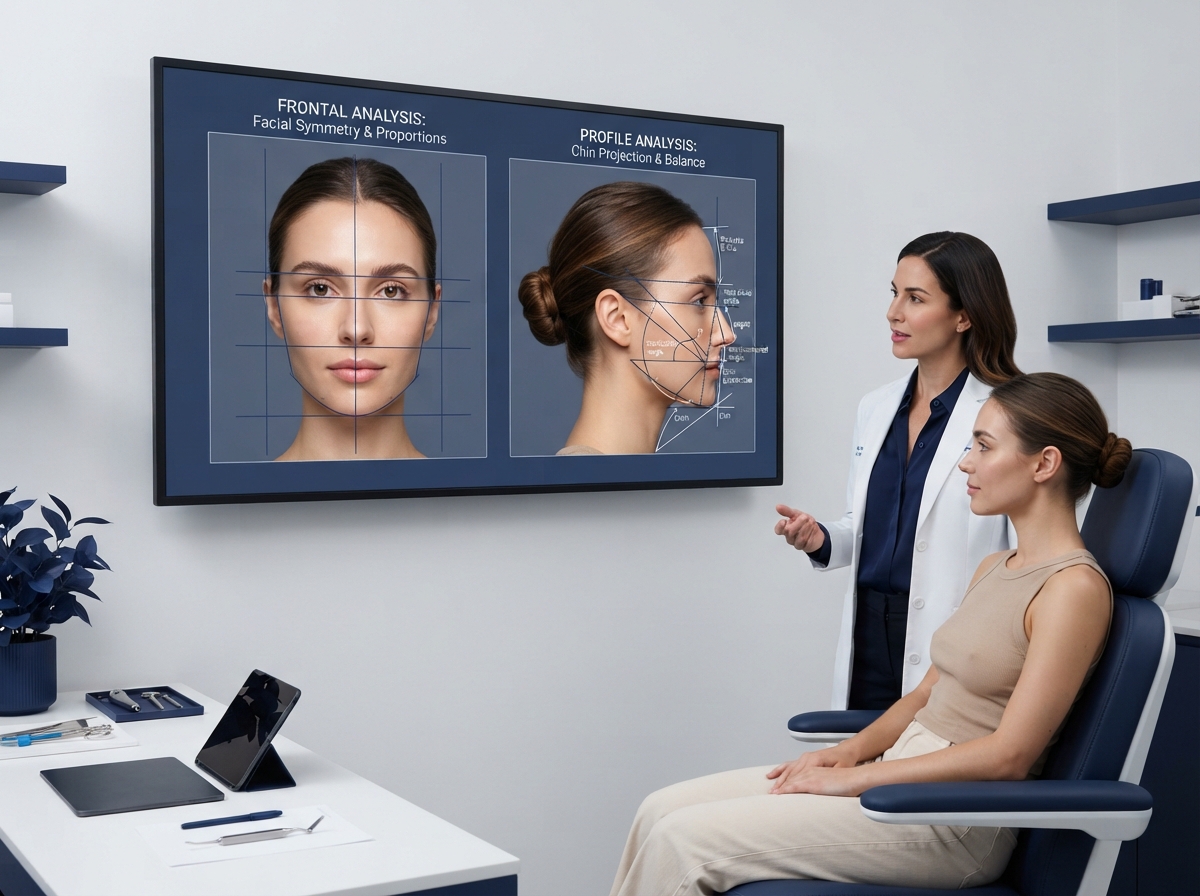
Chin and jawline enhancement aims to achieve balanced facial proportions from every angle
Chin Enhancement vs. Jawline Contouring
While often discussed together, chin enhancement and jawline contouring serve slightly different but complementary purposes.
Chin Enhancement focuses specifically on the anterior (front) projection and width of the chin. It is primarily used to balance the profile and improve the relationship between the nose, lips, and chin.
Jawline Contouring addresses the lateral (side) borders of the lower face. The goal is to create a distinct, crisp transition between the face and the neck. This may involve addressing jowling, removing submental fat, or adding volume along the jawbone. Often, the best results are achieved when both the chin and the broader jawline are evaluated and addressed together.
Your Consultation
A detailed consultation is essential for successful chin and jawline enhancement. During this visit, Dr. Nasser will:
- Review your comprehensive medical and dental history, including any previous facial trauma or orthodontic work.
- Perform a detailed facial analysis, evaluating your profile, skin quality, and neck anatomy.
- Take standardized clinical photography to aid in precise treatment planning.
- Evaluate your dental occlusion (bite) to ensure underlying skeletal issues are properly identified.
- Engage in shared decision-making to develop a personalized treatment plan that aligns with your aesthetic goals.
Surgical Planning
If a surgical approach such as a chin implant is recommended, careful planning ensures natural-looking results. Dr. Nasser evaluates your facial proportions to select the appropriate implant size and shape.
The procedure is typically performed through a small incision placed either inside the mouth (avoiding any external scar) or discreetly in the natural crease beneath the chin. The implant is positioned securely beneath the muscle layer, directly over the bone, ensuring it feels like your natural jaw structure.
Combining Procedures
Because facial harmony relies on the balance of all features, Chin & Jawline Enhancement is frequently combined with other procedures.
It is commonly performed alongside Rhinoplasty (often called a profileplasty) to achieve optimal profile balance. Additionally, it is frequently combined with a Neck Lift or Deep Plane Facelift to provide structural support to the lower face while addressing skin laxity and aging.
Recovery and Healing
Recovery varies between patients depending on the specific procedures performed. Generally, you can expect the following timeline:
- 1The First Few DaysSwelling, bruising, and mild tenderness around the chin and lower lip are common. You may be instructed to wear a supportive garment and keep your head elevated. A soft diet is often recommended, especially if incisions were made inside the mouth.
- 2Weeks One to TwoMost significant swelling and bruising begin to subside. External sutures (if used) are typically removed within a week. Many patients feel comfortable returning to work and light activities during this time.
- 3Weeks Three to SixYou may gradually resume normal exercise and strenuous activities as cleared by Dr. Nasser. The chin will start to feel more natural as the tissues heal and adapt to their new contour.
- 4Long-Term HealingSubtle swelling can persist for several months. The final, refined contour of the chin and jawline will become fully apparent as the healing process completes.
Expected Results
A successful chin and jawline enhancement yields improved facial balance, a stronger profile, and better definition between the face and neck. The goal is always a natural appearance that enhances your inherent features without looking artificial.
While surgical enhancements provide permanent structural support, individual variation exists, and the face will continue to age naturally over time.
Why Patients Choose Dr. Hassan Nasser
Achieving natural facial balance requires precise anatomical knowledge and an artistic eye. Patients choose Dr. Hassan Nasser for chin and jawline enhancement because of his:
- Specialized Expertise: Extensive background in Facial Plastic Surgery and Head & Neck Surgery.
- Comprehensive Analysis: A holistic approach to evaluating facial proportions and profile balance.
- Evidence-Based Planning: Utilizing proven, advanced techniques to ensure safe, predictable, and natural-looking outcomes.
- Patient Education: A commitment to transparent communication, shared decision-making, and setting realistic expectations.
- Compassionate Care: Dedicated support throughout the entire surgical journey, prioritizing patient safety and long-term follow-up.
Educational Disclaimer
This content is provided by the practice of Dr. Hassan Nasser for general educational purposes only. It is not a substitute for professional medical advice, diagnosis, or treatment. Always seek the advice of your physician or other qualified health provider with any questions you may have regarding a medical condition. Individual results and recovery vary.
References & Sources
Preparing For Your Consultation
To ensure a comprehensive evaluation, please prepare the following for your initial visit:
- Medical History: A thorough record of past surgeries, medical conditions, and dental/orthodontic history.
- Medication List: All current prescriptions, over-the-counter medications, vitamins, and herbal supplements.
- Previous Procedures: Information regarding any prior facial surgeries, fillers, or trauma.
- Questions: A written list of questions regarding the procedure, recovery planning, and your aesthetic goals.