
Expert surgical and non-surgical techniques to minimize the appearance of facial scars resulting from trauma, previous surgery, or acne. Serving patients from Dearborn, Southfield, and across Metro Detroit, Dr. Hassan Nasser focuses on blending scars into natural facial contours for a more aesthetically pleasing result.
Understanding Facial Scar Revision
Scars are a natural part of the body's healing process, but when they occur on the face, they can be a source of significant self-consciousness. Whether a scar is raised, depressed, widened, or discolored, it can draw unwanted attention and disrupt facial harmony.
While no scar can be completely erased, facial scar revision utilizes advanced plastic surgery techniques to minimize a scar's visibility. Dr. Hassan Nasser carefully evaluates the characteristics of your scar and employs a tailored approach to blend it with the surrounding skin tone, texture, and natural facial creases.
What This Procedure Treats
Scar revision is highly individualized and can address a variety of scar types, including:
Scar Types & Treatment Approach
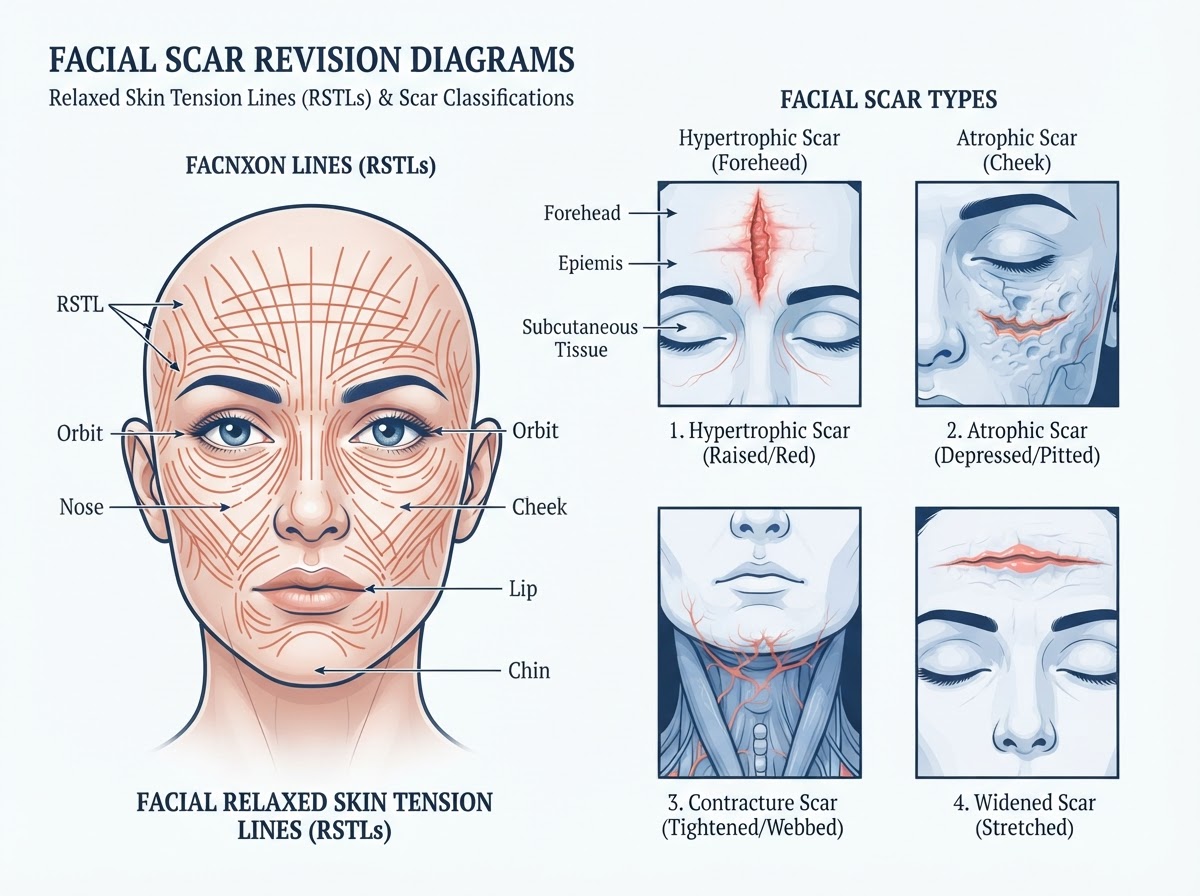
Common facial scar types and the importance of aligning revision with relaxed skin tension lines (RSTLs). Tap each number to learn more.
- Hypertrophic & Keloid ScarsThick, raised, and often red scars that develop due to an overproduction of collagen during healing.
- Depressed (Atrophic) ScarsSunken scars that create pits or divots in the skin, commonly resulting from severe acne or chickenpox.
- Contracture ScarsTight scars that pull the surrounding skin, potentially restricting movement or distorting facial features (like pulling down an eyelid or lip).
- Widened or Poorly Oriented ScarsScars that have stretched over time or run perpendicular to the natural tension lines of the face, making them more noticeable.
Who is a Good Candidate?
You may be a good candidate for scar revision if you:
- Have a facial scar that causes self-consciousness or functional impairment.
- Have allowed sufficient time for the scar to fully mature (typically 12 to 18 months), as scars often improve significantly on their own during this period.
- Have realistic expectations, understanding that the goal is improvement, not complete erasure.
- Do not have active acne or skin infections in the treatment area.
Your Consultation
During your consultation, Dr. Nasser will:
- Evaluate the Scar: Assess the scar's size, shape, depth, color, and orientation relative to natural facial lines.
- Discuss Your Goals: Understand what bothers you most about the scar and what you hope to achieve.
- Determine the Best Approach: Recommend a surgical or non-surgical treatment plan tailored to your specific scar type.
- Set Realistic Expectations: Explain the anticipated outcome and the required healing process.
Treatment Overview
Scar revision may involve non-surgical treatments, surgical excision, or a combination of both:
Non-Surgical Treatments
For raised or red scars, Dr. Nasser may recommend corticosteroid injections to reduce inflammation and flatten the scar. Laser therapy or dermabrasion can be used to smooth surface irregularities and improve color match. Depressed scars may be treated with dermal fillers for temporary improvement or fat grafting for a more permanent solution.
Surgical Scar Revision
For more prominent scars, surgical excision may be necessary. Dr. Nasser removes the old scar and meticulously closes the new wound using advanced plastic surgery techniques.
Techniques like Z-plasty or W-plasty may be used to break up a straight, noticeable scar into an irregular pattern, allowing it to blend more naturally into the surrounding skin creases and reducing tension on the healing wound.
Recovery Timeline
Recovery varies depending on the extent of the revision, but generally follows this timeline for surgical procedures:
- 1First Few DaysMild swelling, bruising, and discomfort are expected. You will be provided with specific wound care instructions to keep the area clean and protected.
- 21 WeekSutures are typically removed. The new scar will look red and may feel firm. You can usually return to normal daily activities, avoiding strenuous exercise.
- 3Long-Term (Months to a Year)The new scar requires time to mature. Over several months, it will soften, flatten, and fade. Strict sun protection and diligent scar massage (as directed by Dr. Nasser) are crucial during this phase to achieve the best possible result.
Benefits
- ✓ Minimized visibility of the scar.
- ✓ Improved blending with natural facial contours and skin tone.
- ✓ Relief from functional restrictions caused by tight contracture scars.
- ✓ Increased self-confidence and psychological well-being.
Potential Risks
- • The new scar may still be visible or heal poorly (especially if you are prone to keloids).
- • Infection or delayed wound healing.
- • Changes in skin sensation around the surgical site.
- • Need for additional treatments (like steroid injections) to optimize the result.
Why Patients Choose Dr. Hassan Nasser
Facial scar revision requires meticulous attention to detail and an artistic eye. Patients trust Dr. Nasser because of his:
- Specialized Training: Fellowship-trained in Facial Plastic and Reconstructive Surgery, providing expertise in advanced scar revision techniques.
- Comprehensive Approach: Offering both surgical and non-surgical options to tailor the treatment to your specific scar type.
- Aesthetic Focus: A dedication to hiding incisions within natural facial tension lines and restoring facial harmony.
- Patient-Centered Care: Providing honest expectations and comprehensive guidance throughout the entire healing process.
Educational Disclaimer
This content is provided by the practice of Dr. Hassan Nasser for general educational purposes only. It is not a substitute for professional medical advice, diagnosis, or treatment. Always seek the advice of your physician or other qualified health provider with any questions you may have regarding a medical condition. Individual results and recovery vary.
References & Sources
Preparing For Your Visit
To ensure a productive consultation, please prepare the following:
- History of the Scar: Be prepared to discuss how and when the scar occurred, and any previous treatments you have tried.
- Medical History: Provide a complete medical history, including any tendency to form keloids or hypertrophic scars.
- Medication List: A complete list of current medications and supplements.
Patient Resources

Renewed Confidence After Scar Revision
Facial scar revision can significantly improve the appearance of scars from trauma, surgery, or acne. Dr. Hassan Nasser's expertise in scar revision techniques helps patients achieve smoother, less visible scarring that blends naturally with surrounding skin.
While no scar can be completely removed, modern revision techniques can make a meaningful difference in both appearance and self-confidence.
Frequently Asked Questions
Educational information regarding facial scar revision.
Expertise in Facial Reconstruction
If a facial scar is causing you functional or aesthetic concerns, specialized reconstructive care can help minimize its appearance. Schedule a consultation with Dr. Hassan Nasser to explore your options.